

Searched for: ΠΡΟΦΗΤΗΣ
translit : PROPHETES
trans-greeked : ΠΡΟΦΗΤΗΣ
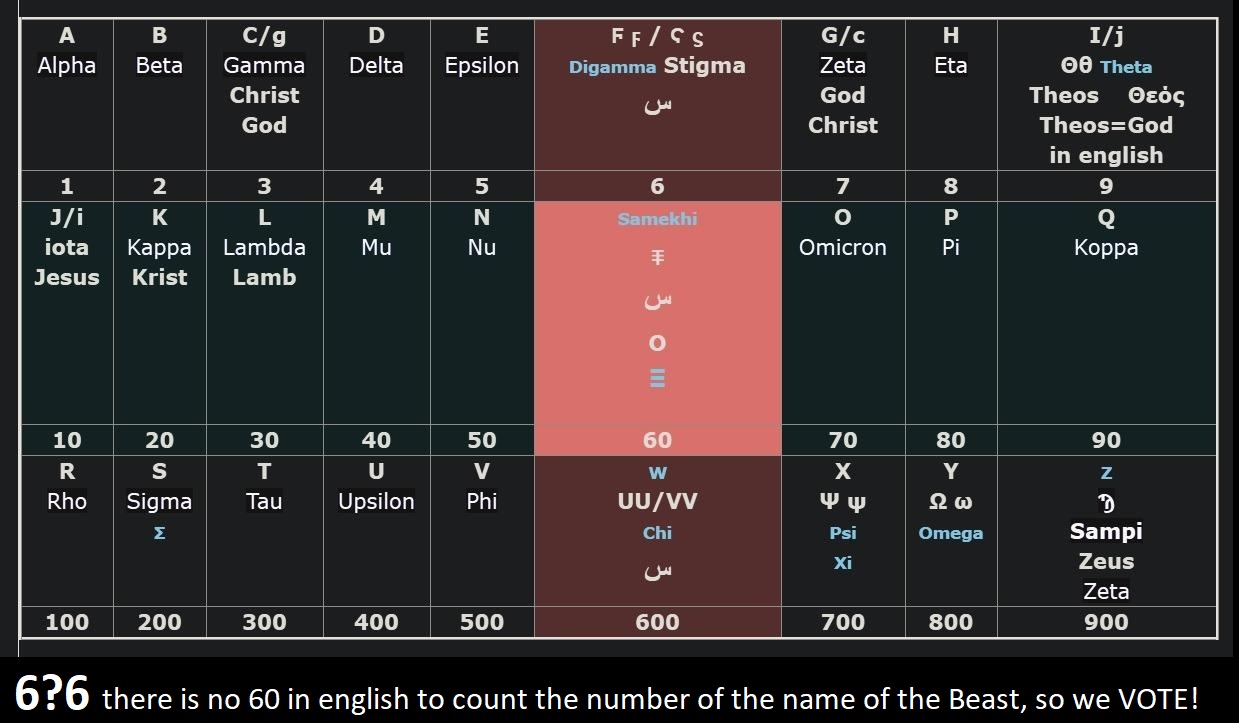
Samekhi English Gematria=766


Search - Search - Search -

Entries found: 1

προφητης

A prophet | Prophet

The term 'A_prophet' is an alternative English translation for 'προφήτης', but 'Prophet' is more commonly used.

Translation by: WizardLM2:7B

Π(P)

Name: GREEK CAPITAL LETTER PI
Unicode: U+928
Number: 80
Translit: P
Language: el
Readable: p
Description:

The symbol Π, known as the Greek letter Pi, originated from the Phoenician letter 𐤏 (pe), which represented the sound /p/. In Greek, Pi also represents the same sound. In terms of esoteric or spiritual meanings, the symbol Π has been associated with concepts of balance, harmony, and stability in various ancient traditions. In the Kabbalistic tradition, the letter Pi can be linked to the sephirah of Gevurah, representing strength and discipline. Symbolically, the Greek letter Pi has been used in mathematics to represent the mathematical constant π, which signifies the ratio of the circumference of a circle to its diameter. This mathematical concept is central to geometry and has been considered a symbol of endlessness and infinity in modern times. Additionally, the symbol has been utilized in various contexts to represent concepts of unity, connection, and cycles in both ancient and modern traditions.


Ρ(R)

Name: GREEK CAPITAL LETTER RHO
Unicode: U+929
Number: 100
Translit: R
Language: el
Readable: r
Description:

The symbol "Ρ" is the uppercase Greek letter Rho. 1. Linguistic Origin: Rho is the 17th letter of the Greek alphabet and has its origins in the Phoenician letter resh. It represents the sound /r/. In ancient Greek, it was used in words like ῥήτωρ (rhetor) meaning "orator" or "speaker." 2. Esoteric Meanings: In ancient Greek mystical traditions, Rho symbolized the concept of motion or flow, as its shape resembles a flowing river. It was also associated with the idea of transformation and change due to its role in various words denoting transition or movement. 3. Symbolic Use: Rho has been used symbolically in various ancient and modern contexts. In Christianity, the Rho symbol (☧), known as the "Chi-Rho," combines the first two letters of the word "Christ" in Greek (Χριστός) and has been a symbol of Christ since the time of the Roman Emperor Constantine. Additionally, Rho is known as a symbol of "resistance" in physics and engineering due to its representation of electrical resistivity in formulas.


Ο(O)

Name: GREEK CAPITAL LETTER OMICRON
Unicode: U+927
Number: 70
Translit: O
Language: el
Readable: o
Description:

The Greek letter "Ο" is the uppercase omicron in the Greek alphabet, commonly transliterated as "O." Its linguistic origin dates back to ancient Greece, where it represented the short vowel sound /o/. In esoteric and spiritual realms, the omicron has been associated with unity, wholeness, and cycles. In some interpretations, it symbolizes the circle of life, eternity, and the endless cycle of birth and rebirth. In ancient Greek philosophy, the omicron was sometimes used as a symbol for the concept of the "One," representing the fundamental unity from which all things arise. This idea resonates with various mystical and spiritual traditions that emphasize the interconnectedness of all existence. In modern contexts, the omicron can be seen in various symbolic representations, such as mandalas, sacred geometric shapes, and artistic designs that convey notions of completeness and infinity.


Φ(PH)

Name: GREEK CAPITAL LETTER PHI
Unicode: U+934
Number: 6
Translit: PH
Language: el
Readable: f
Description:

The letter or symbol Φ is known as Phi in Greek and represents the golden ratio, approximately equal to 1.618. It is derived from the Greek alphabet, where it holds the value of 500. In terms of esoteric or spiritual meanings, the golden ratio has been associated with harmony, beauty, and balance in art, architecture, and nature. It is believed to embody the Divine proportion and is considered a symbol of perfection and symmetry. The golden ratio and the symbol Φ have been used symbolically in ancient Greek architecture and art, notably in the construction of the Parthenon and other classical structures. In modern times, the golden ratio continues to be revered in various fields, including mathematics, aesthetics, and design, as a symbol of timeless beauty and balance.


Η(E)

Name: GREEK CAPITAL LETTER ETA
Unicode: U+919
Number: 5
Translit: E
Language: el
Readable: e
Description:

The letter "Η" is the uppercase form of the Greek letter eta. In the Greek alphabet, eta represents the long vowel sound /ɛː/. Its linguistic origin dates back to ancient Greece where it was used in writing and representing this specific phonetic value. In terms of esoteric or spiritual meanings, eta is associated with different concepts depending on the context. In ancient Greek philosophy, it symbolized the number 8 due to its numerical value in the Greek alphabet system. This association with the number 8 carried symbolic significance related to infinity and cosmic harmony for some. In Kabbalistic traditions, the letter may also be connected to deeper spiritual interpretations, linking it to concepts such as energy flow or divine manifestation. Symbolically, the letter eta has been used in various ancient and modern traditions. In ancient Greek religion and mythology, eta could be found as a symbol within sacred inscriptions and texts, representing aspects of divinity or cosmic order. In modern contexts, the letter may be used in logos, branding, or artistic designs to evoke a sense of classical or Hellenistic aesthetics. Overall, the symbol of eta carries linguistic ties to the Greek language and phonetics, while also holding potential esoteric and symbolic meanings in different cultural and spiritual contexts throughout history.


Τ(T)

Name: GREEK CAPITAL LETTER TAU
Unicode: U+932
Number: 300
Translit: T
Language: el
Readable: τ
Description:

The letter "Τ" is the Greek letter tau, derived from the Phoenician letter taw. In the Greek alphabet, tau has the sound of "t" as in "time." In ancient Greece, tau had associations with the god of time and the symbol of the cross, representing life and resurrection. In Christianity, tau came to symbolize the cross on which Jesus was crucified, known as the "cross of Tau." In esoteric traditions, tau is often associated with concepts of sacrifice, transformation, and rebirth. In Kabbalistic mysticism, tau symbolizes completion and perfection. Across different cultures, tau has been used as a protective symbol, a mark of protection, and a sign of spiritual strength. It has been seen in ancient Egyptian hieroglyphs, Celtic symbolism, alchemical texts, and even modern heraldry.


Η(E)

Name: GREEK CAPITAL LETTER ETA
Unicode: U+919
Number: 5
Translit: E
Language: el
Readable: e
Description:

The letter "Η" is the uppercase form of the Greek letter eta. In the Greek alphabet, eta represents the long vowel sound /ɛː/. Its linguistic origin dates back to ancient Greece where it was used in writing and representing this specific phonetic value. In terms of esoteric or spiritual meanings, eta is associated with different concepts depending on the context. In ancient Greek philosophy, it symbolized the number 8 due to its numerical value in the Greek alphabet system. This association with the number 8 carried symbolic significance related to infinity and cosmic harmony for some. In Kabbalistic traditions, the letter may also be connected to deeper spiritual interpretations, linking it to concepts such as energy flow or divine manifestation. Symbolically, the letter eta has been used in various ancient and modern traditions. In ancient Greek religion and mythology, eta could be found as a symbol within sacred inscriptions and texts, representing aspects of divinity or cosmic order. In modern contexts, the letter may be used in logos, branding, or artistic designs to evoke a sense of classical or Hellenistic aesthetics. Overall, the symbol of eta carries linguistic ties to the Greek language and phonetics, while also holding potential esoteric and symbolic meanings in different cultural and spiritual contexts throughout history.


Σ(S)

Name: GREEK CAPITAL LETTER SIGMA
Unicode: U+931
Number: 200
Translit: S
Language: el
Readable: s
Description:

1. The letter Σ is the uppercase form of the Greek letter sigma, derived from the Phoenician letter shin. In the Greek alphabet, sigma represents the "s" sound. 2. In esoteric and Kabbalistic traditions, sigma is sometimes associated with concepts such as synthesis, unity, and completion. It can symbolize the coming together of opposites or the resolution of conflicts. 3. In ancient Greece, sigma was used as a symbol for the sum of a series of numbers. It has also been linked to symbolism in mathematics and logic. In modern times, sigma is commonly used in various scientific fields, such as statistics and physics, to denote summation. Additionally, some esoteric and spiritual traditions incorporate sigma into their symbols and rituals as a representation of unity and balance.


The Septuagint, Byzantine, & KJV Bibles used are in the Public Domain.

1 Adam and Eve    1 Baruch    1 Chronicles    1 Corinthians    1 Enoch    1 Esdras    1 Ezra    1 Hermas    1 John    1 Kings    1 Maccabees    1 Peter    1 Samuel    1 Thessalonians    1 Timothy    2 Adam and Eve    2 Baruch    2 Chronicles    2 Corinthians    2 Enoch    2 Esdras    2 Ezra    2 Hermas    2 John    2 Kings    2 Maccabees    2 Peter    2 Samuel    2 Thessalonians    2 Timothy    3 Baruch    3 Enoch    3 Hermas    3 John    3 Maccabees    4 Baruch    4 Maccabees    Acts    Acts24    Additions to Esther 10    Amos    Apocalypse of Peter    Baruch    Bel Dragon Theodotio    Bel and the Dragon    Colossians    Daniel    Daniel Theodotionis    Deuteronomy    Ecclesiastes    Ephesians    Esther    Exodus    Ezekiel    Ezra    Galatians    Genesis    Habakkuk    Haggai    Hebrews    Hosea    Isaiah    James    Jasher    Jeremiah    Job    Joel    John    Jonah    Jonas    Joshua    Jubilees    Jude    Judges    Judith    Lamentations    Letter of Jeremiah    Leviticus    Luke    Malachi    Mark    Matthew    Micah    Nahum    Nehemiah    Numbers    Obadiah    Odes    Pericopa Adulterae    Philemon    Philippians    Prayer of Azariah    Prayer of Manasseh    Proverbs    Psalms    Psalms of Solomon    Revelation    Romans    Ruth    Sirach    Song of Solomon    Song of Songs    Songs    Susanna    Susanna Theodotionis    Testament of Solomon    The Apocalipse of Sedrach    The Ascension of Isaiah    The Testament of Asher    The Testament of Benjamin    The Testament of Dan    The Testament of Gad    The Testament of Issachar    The Testament of Joseph    The Testament of Judah    The Testament of Levi    The Testament of Naphtali    The Testament of Reuben    The Testament of Simeon    The Testament of Zebulun    Titus    Tobit    Wisdom    Wisdom of Solomon    Zachariah    Zechariah    Zephaniah   


Total Execution Time: 0.095030069351196 Seconds

How to support this Ministry?

Surplus by Samekhi
Spectrum Bill per month: $507.00 3 ip's not including electricity cost or rent
Our Servers & Software Cost: $259.00 per month not including labor

Cash app $SamekhiAmI

Donate with Cash App

$

In the Greek numbering system of the ancient Greek alphabet, the last letter is ϡ (sampi). The fourth letter before sampi is Χ (chi). Therefore, Χ (chi) is the fourth letter from the last letter in the Greek numbering system and has a numerical value of 600. In the Greek alphabet, sampi (ϡ) is the final letter and has a numerical value of 900. In the modern English alphabet, the last letter is Z. The fourth letter before Z is W. Therefore, W is the fourth letter from the last letter in the English alphabet and has a numerical value of 600.

Here are some words that equal 666 and 616 using W as 600 in English gematria:

Donate w/ Cash App

$

The Samekhi Papers

Welcome to the digital archaeology of ancient texts. Here we decode manuscripts, reveal hidden meanings, and challenge 2000 years of Biblical interpretation.

Our latest discoveries include the P47 manuscript analysis that questions the traditional 666 interpretation, the revelation that ψηφίζω means "vote" not "calculate," and the Gothic Christmas connections that change everything we thought we knew about Weihnachten.

This is legitimate Biblical archaeology using modern digital tools to uncover what ancient scribes really wrote.